A Landscape in Motion
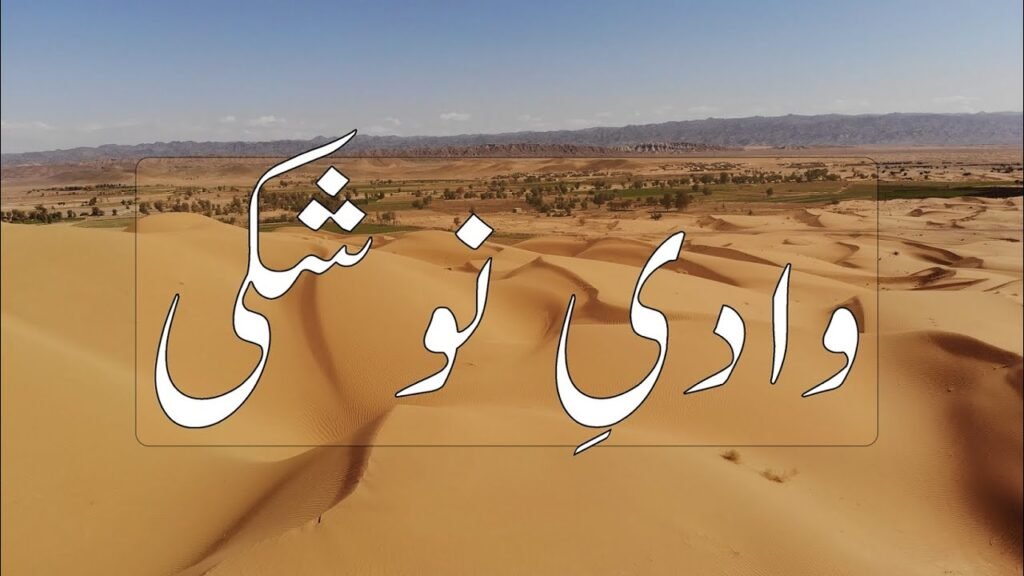
The Noshki Desert is famous for its moving sand dunes. Unlike the static hills found elsewhere, these dunes are constantly reshaped by the winds, creating a fluid landscape of “sand mountains” that never look the same twice.
- The Golden Hue: The sand here is remarkably fine and possesses a distinct golden shimmer, particularly during the “golden hours” of sunrise and sunset.
- Elevation: Situated at approximately 2,900 feet above sea level, the desert provides a cooler atmosphere than the low-lying plains of Sindh or Punjab, though summer temperatures still soar.
- Climate Oddities: While primarily an arid region, the desert recently made headlines in early 2026 when a rare cold wave brought snowfall to the dunes—a phenomenon not seen in the area for nearly two decades.
Zangi Nawar: The Desert’s Hidden Jewel
Perhaps the most surprising feature of the Noshki Desert is the Zangi Nawar Lake. Located about 40 km from Noshki city, this 10-kilometer-long natural lake is a sapphire tucked between high golden dunes.
- A Wildlife Haven: It serves as a vital sanctuary for both local and migratory birds, making it a dream destination for birdwatchers and naturalists.
- The Journey: Accessing the lake is an adventure in itself, often requiring a 4-wheel drive vehicle to navigate the soft, trackless sands.
A Gateway of History
Noshki has historically served as a critical passage between Pakistan, Afghanistan, and Iran.
- Etymology: The name is derived from the Balochi words “Nosh-Koh,” which roughly translates to “finishing work”—a reference to the area’s history as a place where travelers would complete their preparations before the long trek across the border.
- British Exploration: In the early 19th century, British explorers like Henry Pottinger and Charles Christie used Noshki as a staging point for their disguised intelligence missions into Central Asia, masquerading as horse traders to study the strategic terrain.
Cultural Fabric
The desert is home to a rich tapestry of tribes, predominantly the Mandai, Badini, and Mengal. The local culture is a unique blend, heavily influenced by its proximity to Iran. Visitors can experience:
- Linguistic Diversity: While Brahui and Balochi are the primary languages, the area is a melting pot where Pashto and Urdu are also widely understood.
- Agriculture: Despite the dry climate, the surrounding areas are famous for producing high-quality watermelons, melons, and grapes, which flourish in the sandy soil.
Travel Tips for the Desert
For those looking to explore this frontier, keep the following in mind:
- Best Time to Visit: The winter months (November to February) are ideal for avoiding the sweltering heat, though spring offers the best chance to see the desert “bloom” after occasional rains.
- Local Guidance: Because the dunes are constantly shifting, landmarks can disappear overnight. It is highly recommended to travel with a local guide who knows the shifting geography.
- The “Natho Na Raike”: For the best panoramic views of the golden dunes, locals point travelers toward the site of Natho Na Raike, which offers the most photogenic vantage points in the district.
